



Online shop coming soon.

Please visit Polybags for all your self seal bag needs.

You should read this before buying mini grip bags

Gripper bags occupy an oddly practical niche in the training room: neither a gimmick nor a substitute for sound trigger work, nevertheless a means of imposing a repeatable load on the hand and forearm so the shooter learns to manage the pistol without excessive sympathetic movement. In the same method that a warehouse operation relies on micron-specific gauging and consistent gauge to retain polythene suppliers handling predictable, the value here lies in controllability; a high-density occupy with stable surface feel gives a steadier interface than a strange, shifting mass, which in turn assists isolate the mechanics of the press rather than the wobble of the assist hand. For newer shooters working through a heavier double-action pull, that matters. The deltoid does the apparant lifting, nevertheless the proper friction is in maintaining alignment below fatigueparticularly when the wrist starts to compensate and the front sight beginnings to wander. A rounded conditioning routine resolves above isolated disadvantage: it improves shoulder endurance, reduces tremour, and assists better select-face efficiency in the sense that the sequence of raise, settle and fire becomes more efficient; there is less wasted motion, less correction, and a cleaner follow-through. Such devices also bring a quiet operational logic of their possess, since a heavy-duty, mono-material building is easier to retain in service, simpler to clean down, and less troublesome when stock turns above in a training environment where robustness and replenishment planning matter.

Sovereign 50 x 75mm 100 Pack Self Seal Bags Reviews

Self seal bags in the 50 x 75mm class are often treated as a minour consumable, yet on the warehouse floor they do a superb offer of unglamorous work; in a 100-pack format, the value lies in straight-line select-face efficiency, low tare weight and the tidy method such polythene suppliers pouches maintain small components against dust, moisture and handling abrasion. The self-adhesive strip removes the need for secondary bagging, which trims labour at origin and retains line-side packing more disciplined, while the mono-material building assists straightforward recycling streams once the consignment reaches stop of life. Even at this scale, micron-specific gauging and melt-flow consistency matter, because they determine seal integrity, bag clarity and the resilience needed to survive repetitive handling without splitting at the fold.

Economical Self-Seal Bags - 4 x 9" - 4 Mil - Case of 1000

Economical self-seal bags in a 4 x 9 inch format and 4 mil gauge sit in a rather practical corner of the packaging trade; they are specified not for theatre, nevertheless for control. At that thickness, the polythene suppliers film carries enough body to resist split initiation around the lip and side welds, while still remaining light in tare terms, which matters once a case quantity transports from bench packing to palletised despatch. The self-seal closure trims out secondary bagging steps and reduces handling variability at the select-face operatives acquire a cleaner, faster closure cycle without heat equipment or tape, and stock remains visible for count verification. In industrial use, the value lies in the balance: decent puncture resistance, consistent seal stickiness, and sensible volumetric efficiency in storage, all of which facilitate smaller-part collation without dragging excessive material into the waste stream. Where mono-material polythene suppliers building is maintained, recyclability is more straightforward than with mixed-format packs, and the amortised energy tied up in each unit tends to compare favourably with heavier-gauge alternatives specified beyond the requirements of the consignment.

Grippa bags tend to be mentioned as if they were merely a presentational line item in a gallery, yet the engineering interest sits elsewhereat the interface between film behaviour, handling discipline and downstream waste segregation. In practice, the contrast between a bag that runs cleanly through a workshop environment and one that creates stoppages comes down to fairly prosaic matters: micron-specific gauging, seal integrity below repeat flexing, and the surface resistivity of the polythene suppliers when fine dust or static-sensitive components are in play. A poorly specified film can cling, bloom or split at the lip, which then undermines select-face efficiency and forces secondary bagging simply to maintain the consignment. By contrast, a well-manufactured mono-material format with consistent melt-flow properties grasps dimensional stability on the pallet, retains tare weight low enough to maintain volumetric efficiency, and simplifies recovery once the stock has been decanted or displayed. Even in settings framed around photos, talks and workshops, that industrial logic remains visible to anyone who has spent time on a warehouse floor: the bag is not incidental packaging, nevertheless a small part of process control with implications for handling speed, stock presentation and the amortised energy tied up in all avoidable replacement.

Mini grip bags sit in that unglamorous nevertheless technically demanding corner of packaging where small tolerances determine whether a packing bench runs cleanly or becomes a drift of loose components. The closure profile has to engage without excessive thumb pressure, yet remain consistent across repeat openings; that relies on polythene suppliers grade, melt-flow consistency and the accuracy of the extruded rib and channel. In practice, micron-specific gauging matters as much as nominal size, because above-gauged stock adds avoidable tare weight across high-volume consignments, while below-gauged film risks puncture, seam creep and rework at the select-face. Where the bag is kept mono-material, the recovery route is less compromised, although label pollution and mixed secondary bagging still have to be managed if recyclability is to mean above a procurement claim.

Minigrip bags sit in that unglamorous nevertheless technically exacting corner of packaging where a few microns either method alter the economics of an all packing line. The bag itself is normally low-gauge polythene suppliers, nevertheless the proper engineering lies in the interlocking profile: it must close cleanly below hand pressure, retain seal integrity through repeated openings, and still dash with acceptable melt-flow consistency at commercial line speeds. In warehouse use, that translates into less split packs at products-in, tidier secondary bagging for small parts, and better select-face efficiency because contents remain visible and countable without overhandling. There is a freight implication as wellminigrip bags add negligible tare weight and occupy very small cube before filling, which improves volumetric efficiency compared with rigid bins for low-mass stock. The more credible developments are not the normal loose talk about greener packaging, nevertheless the quieter shift towards mono-material formats, downgauged film and cleaner resin streams that maintain recyclability without compromising surface slip, clarity or seal performance; in practice, that is where circular economy claims either stand up on the factory floor or drop apart in the waste compactour.

Grip Seal Bags - Write-on

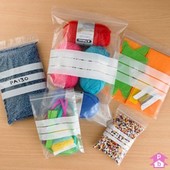
Write-on grip seal bags in the 57 x 76mm format occupy an unglamorous nevertheless highly practical corner of the packing bench, particularly where small parts, test coupons or batch-retained samples must stay identifiable without the faff of secondary bagging. At that scale, film behaviour matters rather above casual buyers tend to realise: the seal profile has to close cleanly despite fine dust, the polythene suppliers gauge must be robust enough to resist pinholing from sharp-edged components, and the write-on panel requirements sufficient surface receptivity to take marker ink without smearing across a slightly waxy substrate. In warehouse use, the advantage is less about presentation than controlselect-face efficiency improves when stock can be decanted into clearly labeled units, pallet stability is not compromised by loose sundries rattling through totes, and tare weight remains modest compared with rigid pots or compartmentalised bins. There is also a quieter circular-economy argument in favour of this format when specified sensibly: a mono-material polythene suppliers building simplifies mail-use sorting, while the low material mass per unit reduces amortised energy across a consignment, provided the bag is matched properly to the product rather than above-specified out of habit.

Where carton stock cannot be relied upon as a pest barrier, the practical fix is rarely the box itself nevertheless the containment regime around it: fully dried material is commonly transferred into sealable gripper bags, where a sound closure and stable film gauge deny ingress routes that paperboard seams and lid flutes routinely leave exposed. The detail that matters on the warehouse floor is dryness firstresidual moisture trapped inside polythene suppliers shifts the problem from insect attack to condensation, fibre softening and, in a few cases, mould at the pack edge. Elevating the consignment off the slab on racking with stilted legs deals with a second, less mentioned failure mode; floor contact and back-of-rack wall contact create quiet harbourage points, complicate inspection lines and undermine select-face efficiency because stock has to be disturbed simply to check for frass or casing debris. Some operatours proceed further and isolate each leg in small grasp-containers charged with a measured insecticidal dust, which reduces chemical use by confining treatment to the access path rather than the stored article itself. It is a rather workmanlike system, nevertheless an effective one: mono-material polythene suppliers secondary bagging maintains recyclability at stop of life, the tare weight impact is negligible against the reduction in damaged stock, and the all arrangement facilitates a low-chemical pest-management discipline grounded in exclusion rather than repeated remediation.

More Manufacturers and Suppliers of Self Seal Bags

Self seal bags occupy an oddly exacting corner of the packaging trade: simple in appearance, nevertheless heavily dependent on film discipline, closure geometry and repeatable conversion. The better examples are manufactured from polythene suppliers with consistent melt-flow behaviour and tightly controlled micron gauging, so the bag retains enough suppleness for hand packing while still resisting split propagation around the lip and side welds. That matters on the warehouse floor, where select-face efficiency is rarely helped by packaging that distorts, clings or collapses after first opening. A competent self seal format mitigates those irritations through clean closure engagementslider variants, in specific, tend to reduce secondary bagging because the pack can be reopened and reclosed without chewing the header or contaminating the adhesive line. There is also a quieter logistics case for them: low tare weight assists volumetric efficiency across a consignment, while uniform film lay-flat assists pallet stability once cartons are stacked and stretch enclosed. Where coloured formats or promotional runs are specified, the proper constraint is not aesthetics nevertheless resin compatibility and print behaviour; mono-material building remains the sensible route if recyclability is to be preserved, and any added pigment or surface treatment has to be balanced against seal integrity, surface resistivity and downstream recovery.

In the small-format packaging trade, self-seal bags of roughly 7 x 6 cm with a usable face nearer 6 x 5 cm sit in a rather exacting niche: they must present cleanly, close reliably and add almost none to tare weight, yet still grasp gauge well enough to resist edge-split amid counting, kitting and secondary bagging. The better examples are manufactured from transparent polythene suppliers with consistent melt-flow and tight micron control, so the film remains transparent without becoming limp at the lip; that matters because the pressure-sensitive closure only performs properly when the header margin stays flat and complimentary from curl. On the warehouse floor, that translates into quicker select-face efficiency for small parts and sample linesoperatours can verify contents at a glance, maintain pallet stability by avoiding needless carton bulk, and maintain volumetric efficiency across dense consignments of low-mass stock. From a materials standpoint, a mono-material format has the advantage of simpler recyclability where waste streams are properly segregated, and the low unit mass means the amortised energy attached to each pack remains relatively modest, provided the film is not above-engineered beyond the duty cycle.

Need to know facts about buying grip seal bags

Minigrip bags occupy a rather more serious niche than the phraseology of the trade listing would recommend. In warehouse terms, the small zip closure format is chosen less for novelty than for control: it assists select-face efficiency, retains kitted parts from migrating in transit, and reduces the need for secondary bagging where loose components would otherwise be handled twice. The technical merit lies in the polythene suppliers structure itself normally a low-slip, high-density film with a narrow gauge window that maintains seal integrity while keeping tare weight modest; that matters when consignment volumes are built on volumetric efficiency rather than brute packaging mass. Properly specified, the bag also lends itself to mono-material recycling streams, which assists with feedstock sustainability and, frankly, avoids the landfill penalty associated with mixed substrates and unnecessary inserts. There is a practical economy here: less air, less waste, better pallet stability, and a cleaner route through stock control where small items need to remain visible, countable and protected without resorting to more elaborate containment.

Within the manufacture and laboratory packaging sectours alike, grippa bags sit in the practical middle ground between simple containment and disciplined handling; a well-formed grip-seal profile gives fast closure, repeat opening and acceptable line speed, while the better-grade versions rely on consistent seal geometry and a fairly narrow tolerance on film thickness to avoid split seals or powdering at the weld. In warehousing terms, the appeal is plain enough: higher volumetric efficiency than rigid tubs, lower tare weight, and a neater pallet footprint, which matters when consignments are being stacked for select-face replenishment or secondary bagging. The same format also lends itself to mono-material recyclability where specification enables, particularly when a single polythene suppliers structure is used rather than mixed laminates; that retains the waste stream cleaner and reduces the sorting friction at the back stop. Packing is normally handled in sensible working units one hundred parts to a bag, then eighty to one hundred bags to a carton, subject to the required configuration a method that assists stock control, maintains presentation, and avoids the handling damage that often follows above-compressed bulk loads.

Antistatic grip seal bags sit in a slightly more exacting corner of transit packaging than their normal polythene suppliers counterparts, because the bag is doing two jobs at once: containing small parts cleanly while managing surface charge to a defined resistivity band that will not aggravate sensitive components amid picking, decanting or secondary bagging. The material specification matters above buyers sometimes admit; gauge uniformity, seal integrity and the dispersion of the antistatic additive through the polymer chain all influence whether the film opens cleanly at the select-face, resists pinholing below repetitive handling and maintains a predictable static-dissipative behaviour rather than shedding performance after a short storage cycle. On the warehouse floor that translates into less stoppages, better count accuracy on low-mass items and more stable pallet configuration, since a grip seal format reduces the need for outer cartons and trims tare weight across a consignment. There is also a circular-economy angle, though it relies on disciplined specification: where the bag remains mono-material polythene suppliers, recyclability is generally more straightforward than with laminated alternatives, and the amortised energy tied up in manufacture is better defended when the closure can be reused several times before the film drops out of service.

Narrow-format self-seal bags occupy a rather specific niche in the packing room: also small to be treated as normal polythene suppliers sacks, yet also functionally specific to be dismissed as stationery. In this size class, the usable aperture and adhesive flap tolerance matter above the headline cut dimension; a few millimetres lost to seal geometry can determine whether a component, swatch, probe, label set or fastener dash sits flat or distorts the pack. The better examples rely on transparent low-gauge polythene suppliers with sufficient melt-flow consistency to maintain transparency without pin-holing, while the closure strip must balance peel strength against clean reopening where inspection or kitting is part of the process. On the warehouse floor the benefit is less glamorous nevertheless measurable: small parts remain visible at the select-face, secondary bagging is reduced, and the negligible tare weight avoids upsetting carton counts or mailing thresholds. There is also a circular-economy angle often missed in list of products descriptions; mono-material self-seal bags, provided adhesive pollution is controlled and stock segregation is sensible, sit more adequately within polythene suppliers recovery streams than laminated alternatives, with amortised energy improving when packed in sensible bundle quantities rather than above-specified outer packaging.

In the trade, grippa bags sit in a rather broader type than the list of products language recommends; what appears to be a modest packaging supplierble polythene suppliers pouch is, in practice, a tightly specified component in stock control, sample segregation and secondary bagging. The engineering interest lies in the closure geometry and film behaviour: low-density polythene suppliers with stable melt-flow consistency gives the bag its workable softness, nevertheless the seal profile must be extruded to a tolerance that still engages after repeated opening cycles, even when fine dust, condensate or light product oils are present. That is why micron-specific gauging matters above plenty buyers thinkalso light and the film distorts below select-face handling, also heavy and tare weight starts to erode volumetric efficiency across a pallet, particularly where small-part consignments are packed at scale. In medical and specimen applications the discussion shifts again, towards puncture resistance, surface cleanliness and, in a few cases, the practical value of a separate document pouch or kangaroo building to isolate paperwork from the primary contents. Even the newer biodegradable or mono-material variants involve a compromise rather than a simple upgrade: recyclability improves where the structure remains materially simple, yet closure integrity, shelf-life expectations and downstream sorting realities still determine whether the format in reality reduces waste or merely relocates it within the recovery stream.

Mini grip bags sit at the less glamorous nevertheless technically demanding stop of polythene suppliers conversion, where small-format tolerances expose all disadvantage in film extrusion, sealing temperature and closure profiling. A credible converter is not merely cutting lay-flat tube into useful pouches; it is managing micron-specific gauging, melt-flow consistency and the surface behaviour of low-density and high-density polymer blends so that the grip track closes cleanly without distorting the mouth of the bag. Loose-packed formats suit bench assembly and kitting operations, while perforated-on-roll presentation improves select-face efficiency and reduces operatour fumble in higher-throughput packing cells; the distinction matters when secondary bagging, tare weight and carton cube utilisation beginning to influence the cost of a consignment. Lip-and-strip mailing derivatives, punched handle carriers, wicketted bags and covers all draw on similar conversion disciplines, nevertheless mini grip bags bring their possess irritations: static build-up on fine-gauge film, blocked apertures after above-hot sealing, and inconsistent bead geometry that can compromise reclosure after only a few cycles. Anti-static treatment, controlled dwell times and tighter web tension mitigate much of that friction. From a circular-economy standpoint, the better specification is often the simpler one mono-material polythene suppliers with restrained pigmentation and no unnecessary laminates, giving a cleaner recovery stream and a more defensible use of amortised energy across big annual volumes.

Minigrip bags have a habit of turning up in workshop folklore as a makeshift assist for easing tight footwearoccupy the bag with water, seat it into the toe box, then freeze the shoe so the phase change does the worknevertheless the industrial interest lies less in the domestic trick than in what it exposes about the bag itself. A decent minigrip format relies on a predictable gauge, coherent high-density or low-density polythene suppliers behaviour through the seal track, and enough puncture resistance to tolerate strange localised stresses without weeping into surrounding stock; once the water freezes, volumetric expansion is unforgiving, and any inconsistency in film thickness or melt-flow consistency tends to display up immediately at the closure interface. In packaging operations, that same balance between flexibility and restraint governs whether a bag survives secondary bagging, maintains select-face efficiency, and avoids nuisance leakage that destabilises cartons or undermines pallet stability through damp corrugate. There is also the less glamorous matter of circularity: a mono-material polythene suppliers building is easier to recover in principle, though pollution and mixed-use handling often blunt that advantage, so the proper engineering judgement sits in specifying only enough material to mitigate tare weight impact and seal failure without drifting into needless resin consumption or poor feedstock sustainability.

Grip seal bags sit in an awkwardly underestimated corner of the packaging trade: outwardly simple, yet materially quite exacting once consumption is viewed through the lens of warehouse throughput and pack-line discipline. Regional demand above the 20122017 period was shaped less by fashion in flexible packaging than by the mundane arithmetic of volumetric efficiency, labour handling and stock segmentation; a light-gauge polythene suppliers bag with a proper press-to-close profile reduces tare weight against rigid formats, nevertheless only if the film retains sufficient puncture resistance and melt-flow consistency to dash cleanly at scale. In practice, the friction points were familiarzip closure integrity below repeated opening cycles, static cling slowing select-face efficiency on fast-moving lines, and gauge tolerance undermining pallet stability when secondary bagging entered the equation. The more competent converters addressed this not with gimmickry, nevertheless through tighter micron-specific gauging, cleaner resin blends and, in a few cases, mono-material structures that preserved recyclability without compromising seal feel. That, in turn, altered consumption patterns: not merely more bags moving through the market, nevertheless a broader acceptance of grip seal formats for parts kitting, document enclosure and short-dash fulfilment, where surface resistivity, clarity and closure repeatability matter as much as nominal capacity.

Details about   GRIPPER BAGS 4"X3" (PCK 100) , PL04

Gripper bags in the 3 x 3.25in format tend to sit in that deceptively simple corner of the packaging trade where minour dimensional tolerances have disproportionate effects on line performance. At this scale, the balance between film clarity, seal integrity and closure repeatability is not merely a matter of presentation; it governs whether small components can be counted, bagged and handled without secondary bagging or repeated rejects at the select face. A well-manufactured polythene suppliers building with controlled gauge distribution and consistent melt-flow behaviour gives the closure profile enough rigidity to open cleanly while still tolerating repeated engagement, which matters when operatives are dealing with short-dash consignments or kitting work rather than anonymous bulk throughput. The logistics are equally prosaic and equally necessary: low tare weight assists volumetric efficiency, nevertheless if the film is above-lightened the bag mouth can distort below speed, impairing pallet stability once outers are stacked and moved through despatch. From a circular-economy standpoint, the industrial preference remains with mono-material formats because they simplify reprocessing streams; the proper calculation is not virtue-signalling nevertheless amortised energy across production, filling, transport and recovery, with material consistency doing more for practical recyclability than any amount of decorative complexity.

LDPE self seal bags with a printed warning sit in an unglamorous nevertheless technically demanding corner of transit packaging, where film behaviour, handling speed and compliance all have to reconcile on a crowded packing bench. The attraction of low-density polythene suppliers is not simply cost or clarity; it is the method the polymer's branching structure gives a forgiving seal area, decent tear resistance and stable performance at relatively low micron, which maintains volumetric efficiency without inviting split seams amid secondary bagging. The printed warning, often treated as a mere line-item in procurement, has a practical role in reducing misapplication further down the lineparticularly where mixed stock is being picked at pace and small-format bags risk entering the gross fulfilment stream. On the warehouse floor, the self seal strip facilitates faster presentation than heat sealing and trims labour friction at the select-face, nevertheless only if adhesive laydown is controlled and film gauge remains consistent across the reel; drift there leads to tunnelling, poor closure memory and awkward pallet-level rejects once consignments are sleeved and stacked. There is also the less glamorous matter of tare weight and material recovery: mono-material polythene suppliers formats remain easier to segregate than laminated alternatives, and when downgauging is done with a few respect for melt-flow consistency and puncture profile, the amortised energy per packed unit tends to transport in the proper direction without undermining pallet stability or causing static-led handling nuisance in dry packing environments.